ENDING CREDITS
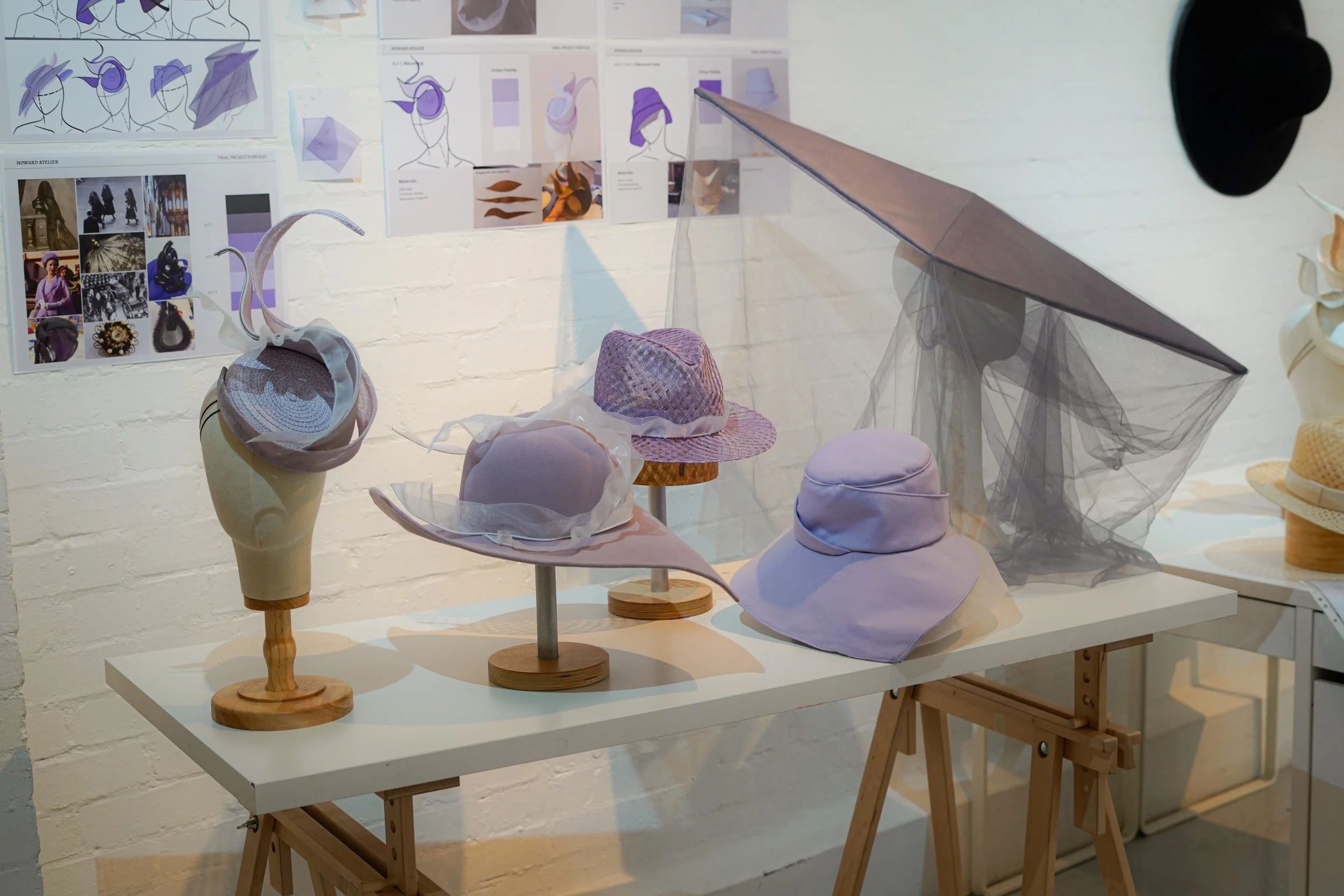
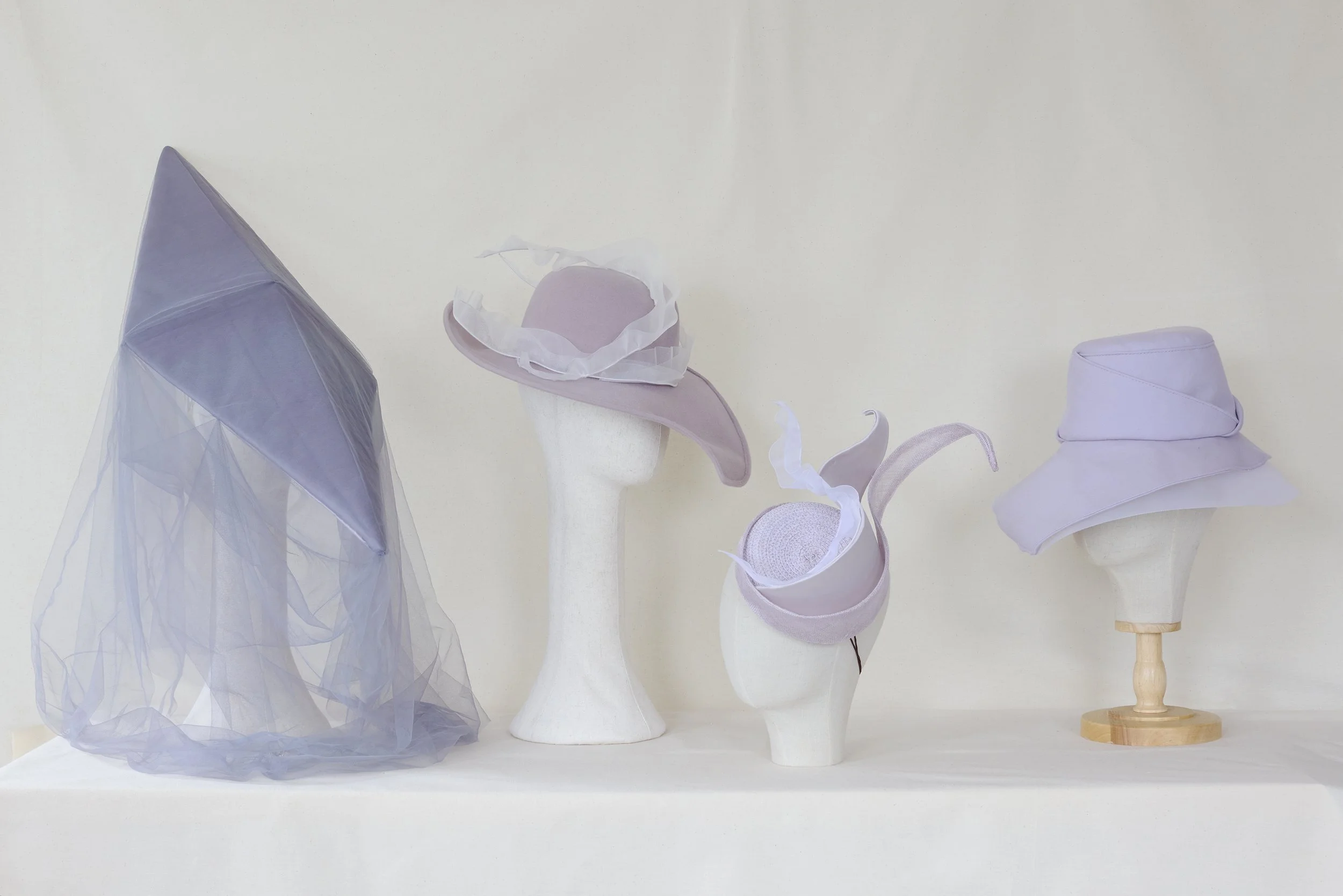
Ending Credits explores mourning as a performative language shaped through visibility, dress and presence. Inspired by Queen Elizabeth II’s first appearance in 1952, following the death of her father King George VI. The collection draws on 1940s-60s British couture, emphasising the precision of tailoring and handcrafted details. The colour Lavender was traditionally used by the Victorians as a colour of transition used to dilute the heaviness of black and to signal the re-entry into every day. This collection is broken up into three acts progressing from full mourning to the transformation as monarch. It traces a shift from concealment to controlled revelation.
Act 1 addresses grief as something that is controlled and performed. In Act 2, half mourning develops into becoming, as identity begins to reappear as mourning becomes negotiated. Leading to Act 3 where mourning doesn’t disappear it transforms, her performed appearance changes as she’s crowned as the new monarch, symbolising a formal end to the mourning period. Ending Credits is set within a liminal space of transition, the narrative reflects a shift between identities from daughter to monarch from private individual to public figure, from personal loss to national mourning.
Photographed by Carmel King
Act 1. Requiem
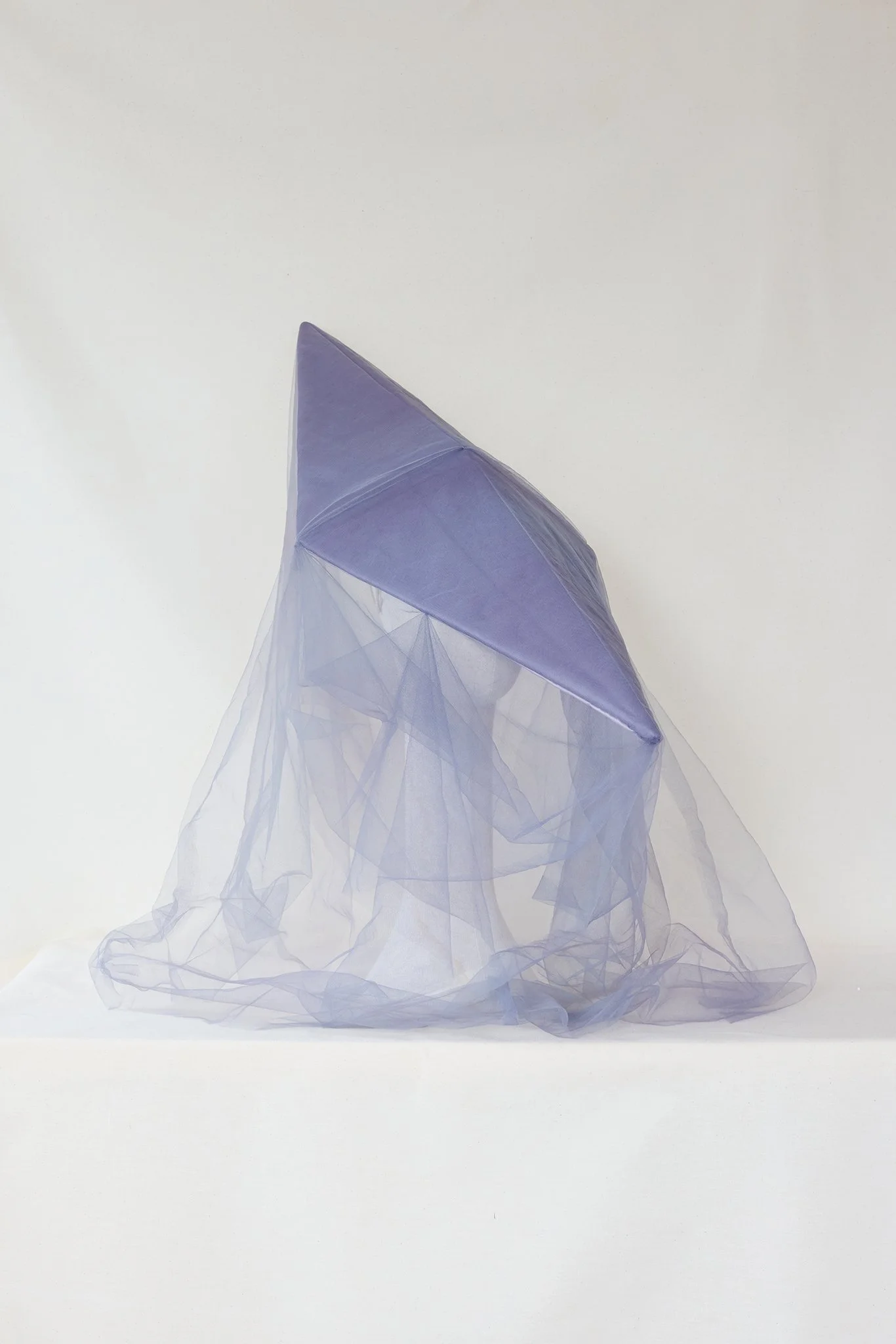
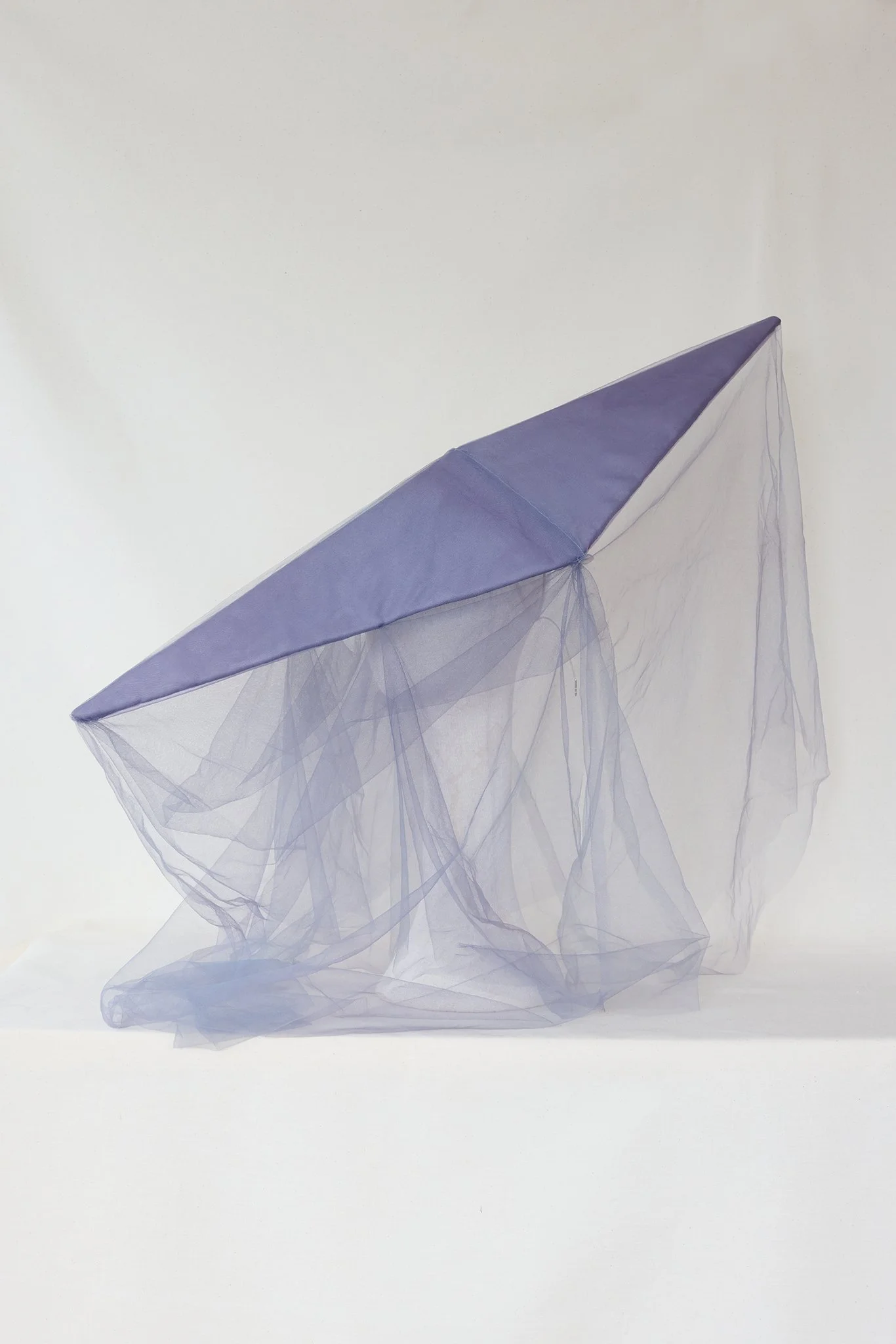
Inspired by mourning veils and architectural facades, angled and drawn to distort the gaze and eye line of the wearer - a form of full mourning in its controlled manner. A structured base covered in satin and an ashy organza. Over a tailored draped hand dyed veil to provide a layer of masking and removed appearance.
Act 2. Obscured Folds
PART 1.
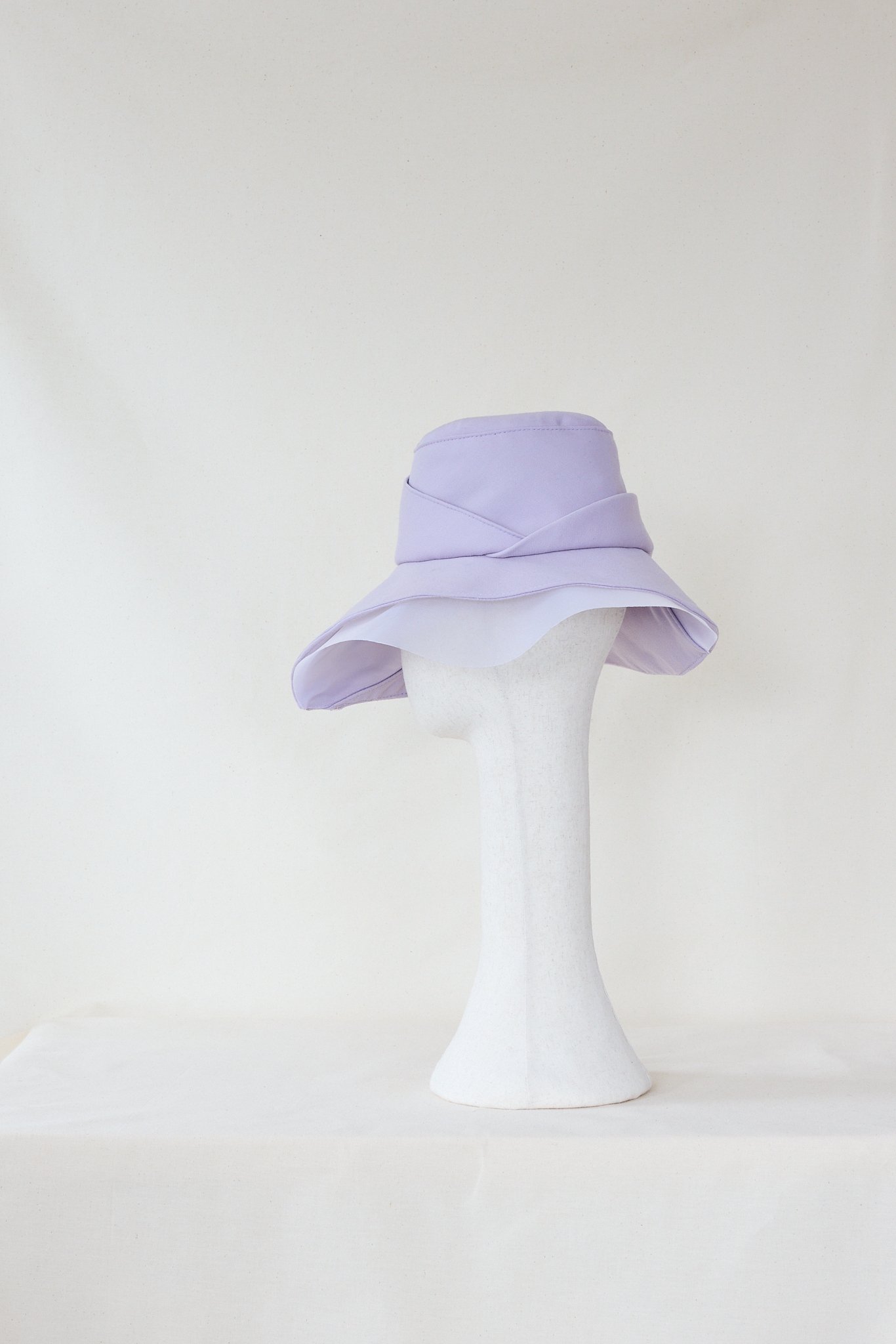
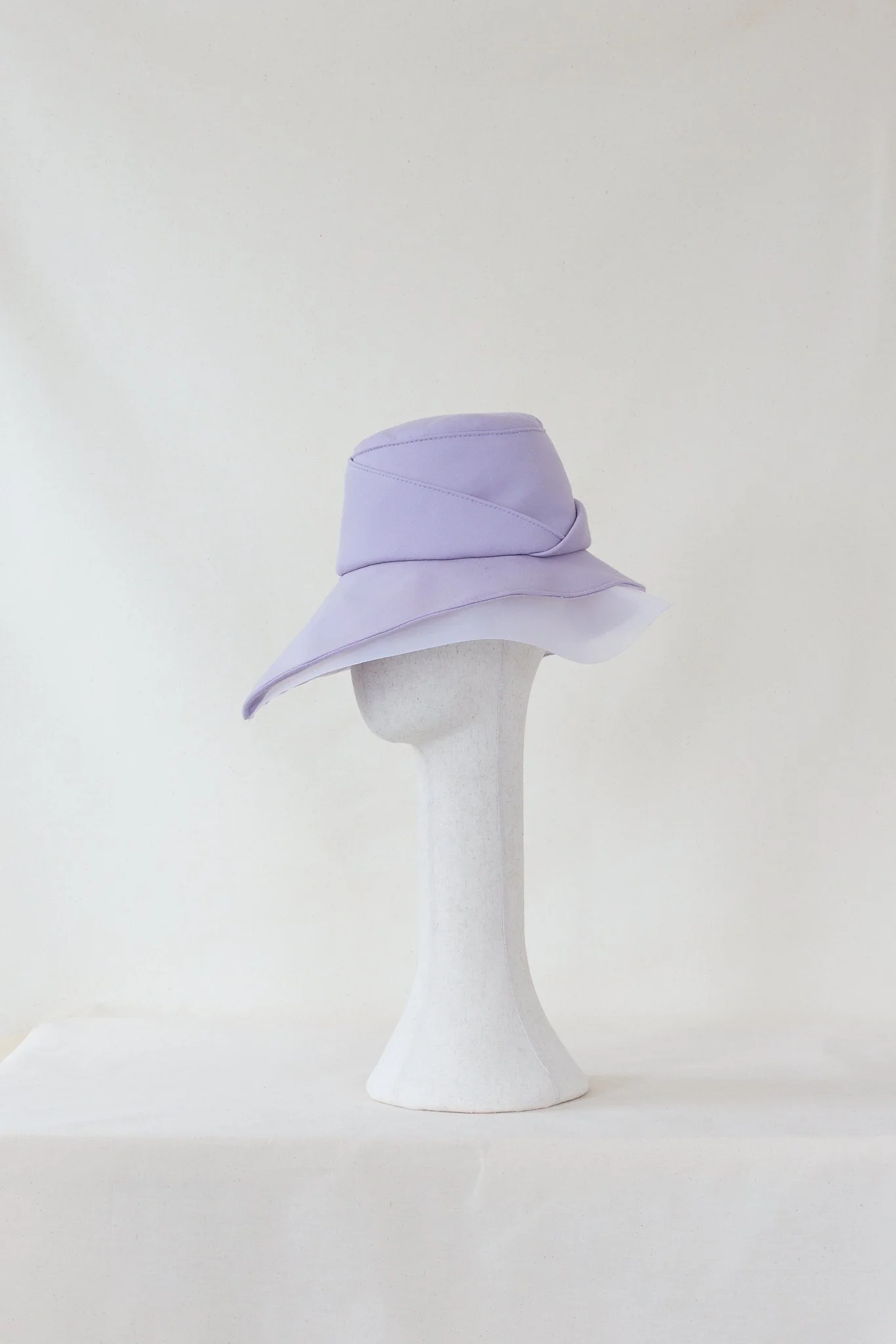
This hat is inspired by the transition from full mourning as it shifts into the next stage. A wool crepe and crinoline piece created with angular folds and exposed underbrim this hat functions in a way in which the wearer can be removed yet seen.
Act 2. Interlude
PART 2.
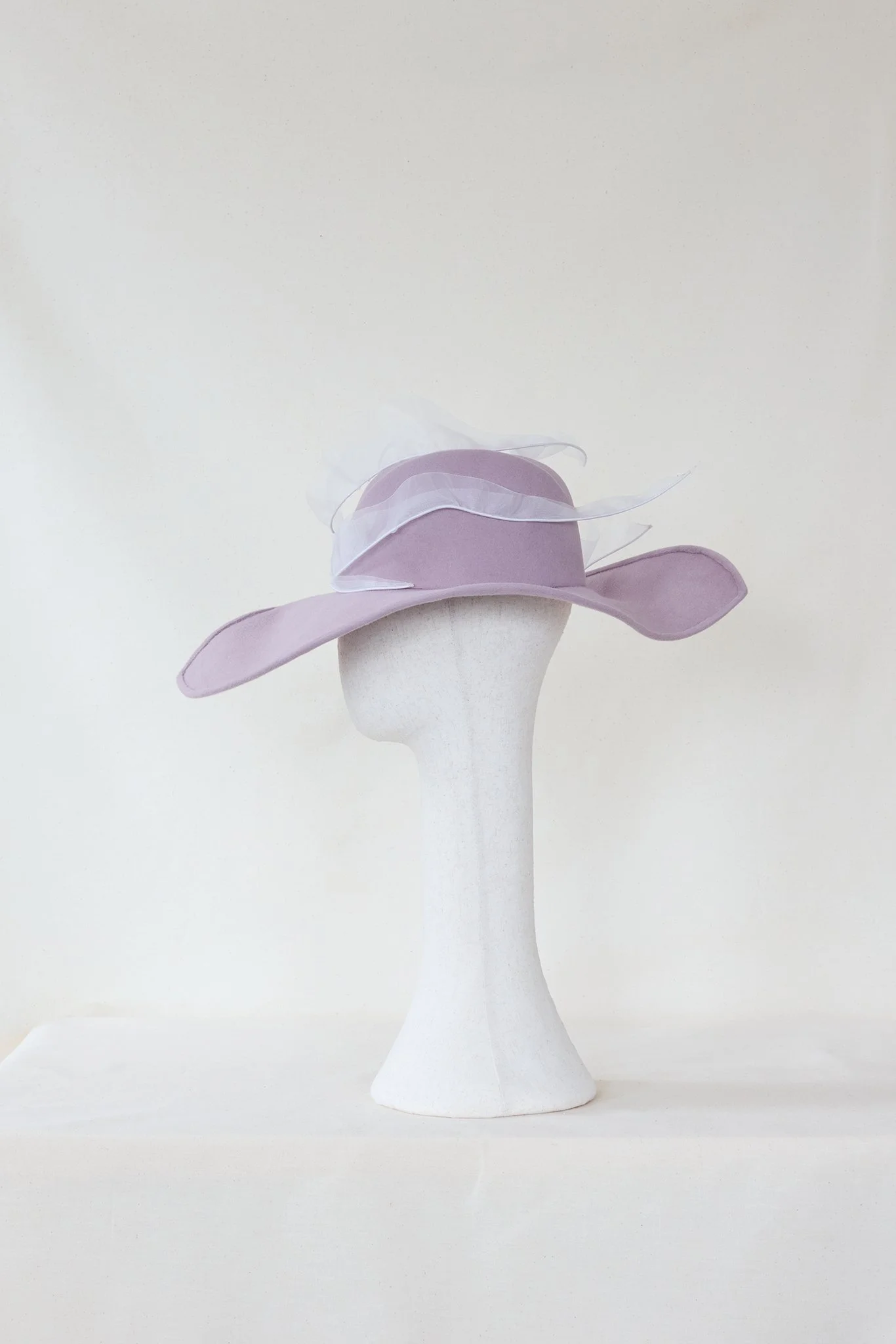
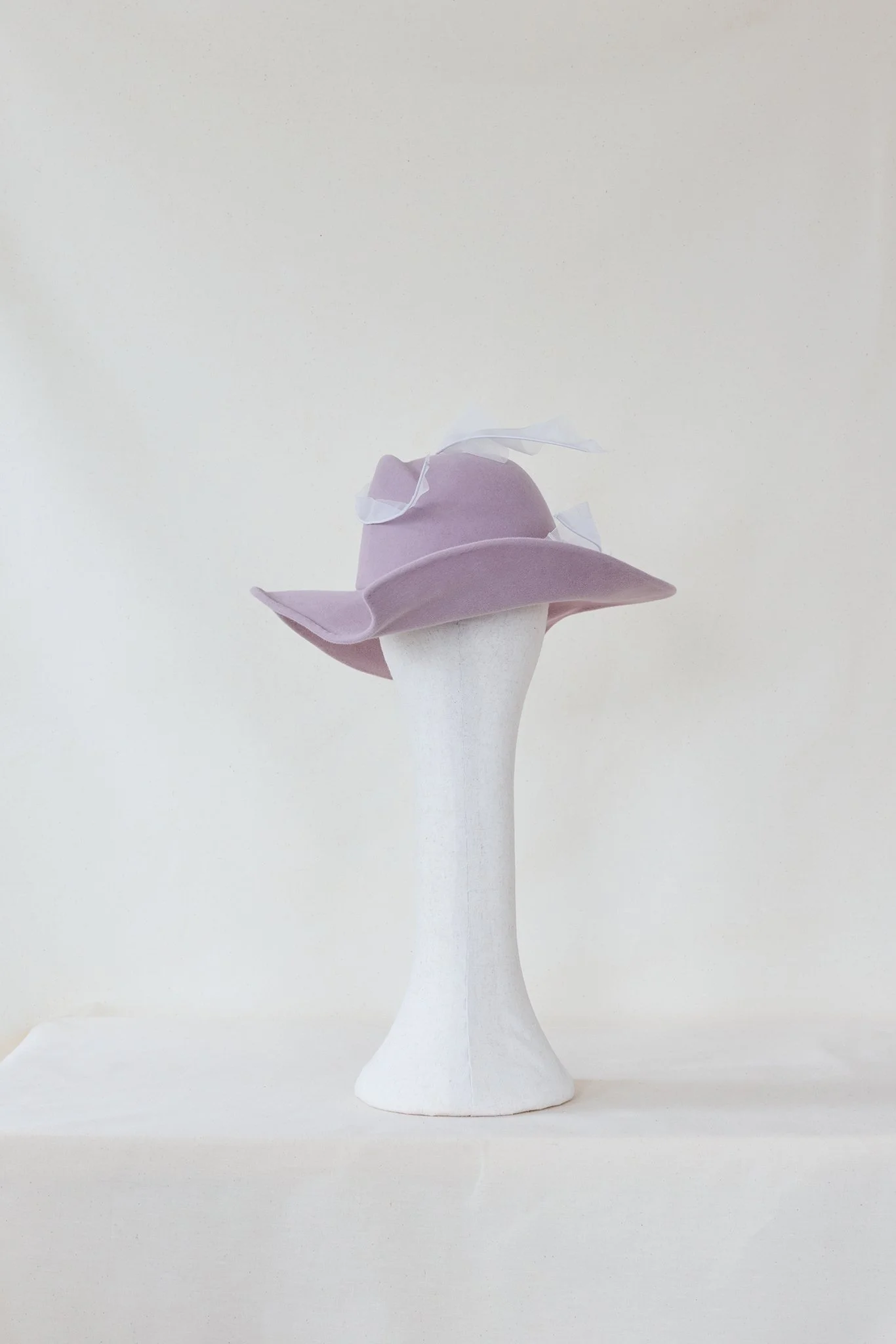
An asymmetric mauve felt hat with a swooping elongated brim. With translucent crinoline swoops dancing around the crown. Romantic yet architectural, the hat explores concealment and movement with quiet nod to exposure through asymmetrical form.
Act 3. Becoming
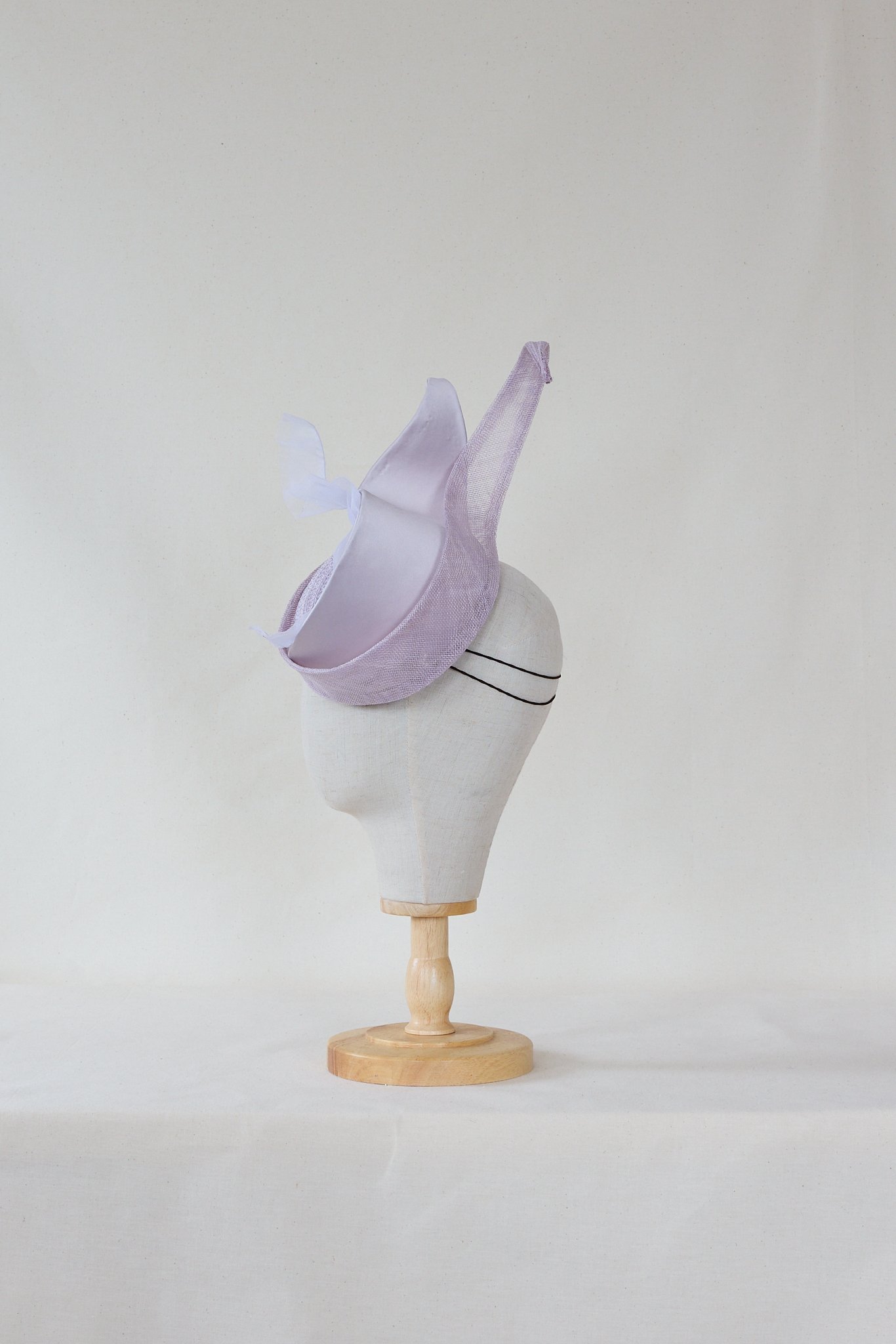
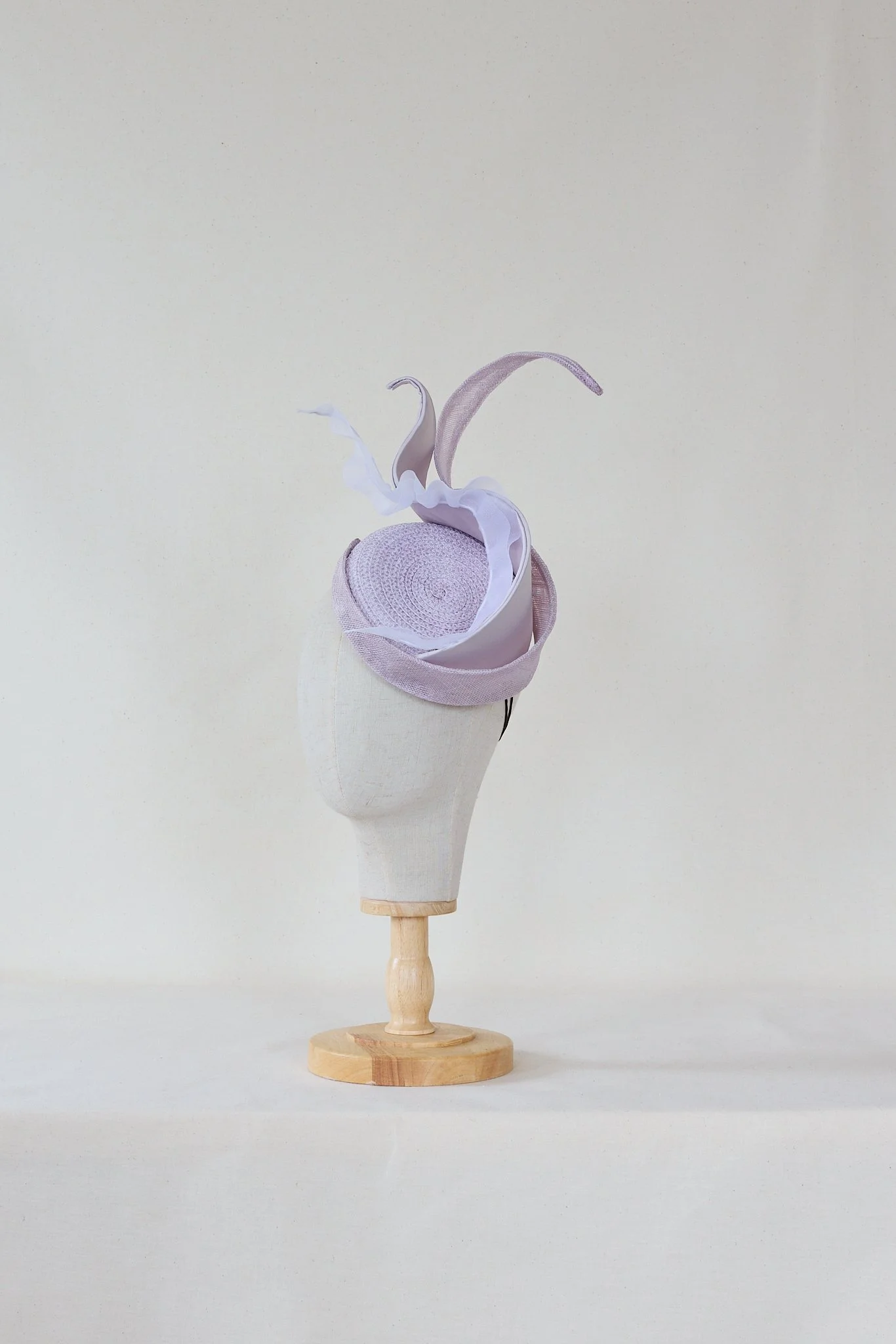
The unfurling pale lavender percher. This hat was made with vintage Swiss Paglina braid sewn on the 17-guinea machine to form the button base of the hat. With leaf motifs made from sinamay, satin and crinoline. This piece plays on the ideas of Act 3, as the hat reflects the idea of unfurling and becoming something new.